Switchboards rarely fail without warning. A loose termination, an overloaded cable or a breaker that is wearing out will usually run hotter than it should for weeks or months before it causes a trip, a fire or a shutdown. Thermal imaging lets an electrician see that heat while the board is running normally.
For warehouses, factories, offices and strata buildings, a regular thermal scan is one of the most cost-effective ways to reduce unplanned downtime. Here is what it finds, how it is done and what you should expect to receive.
How thermal imaging works
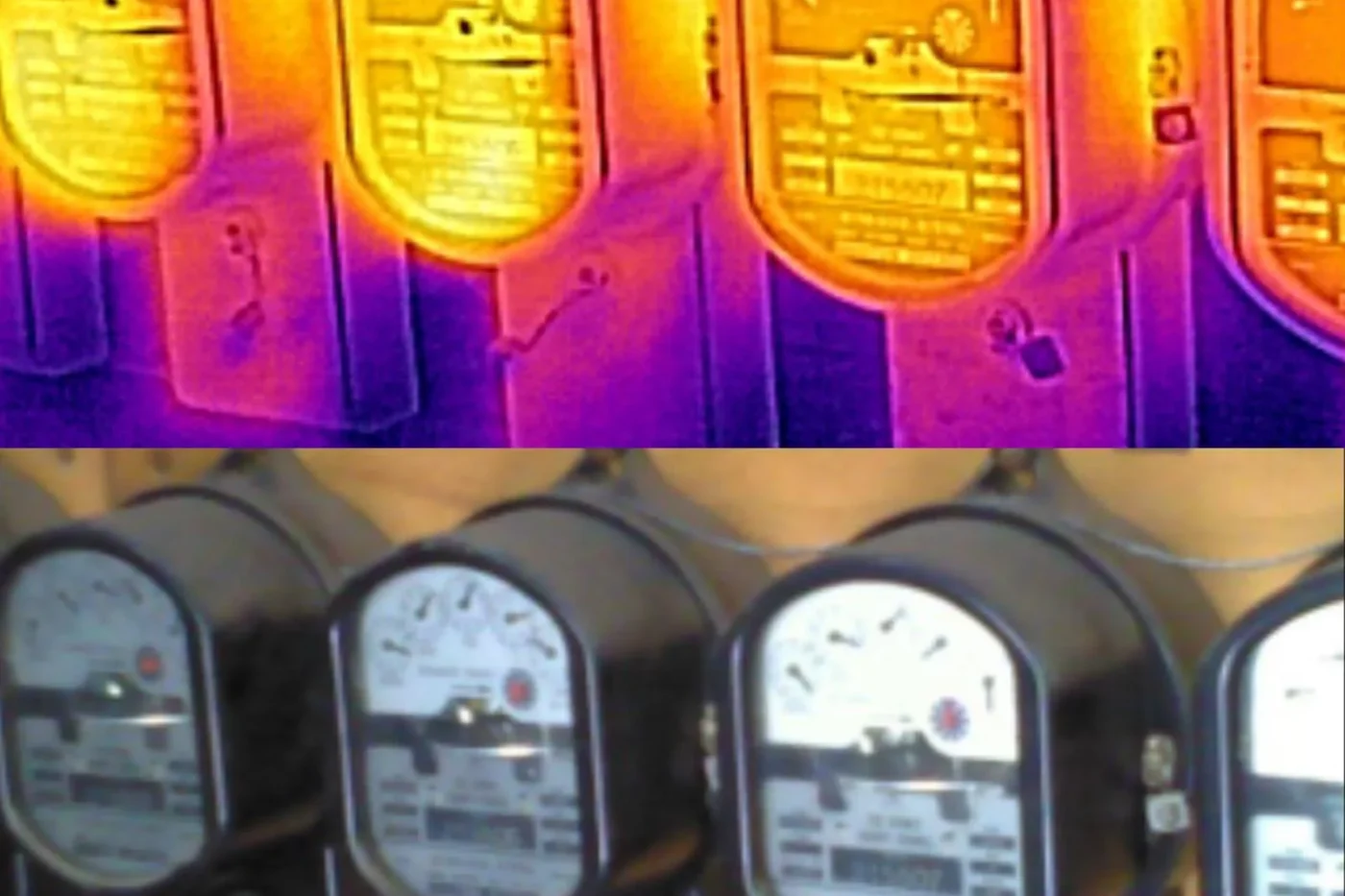
A thermal camera measures the infrared energy given off by surfaces and turns it into an image where temperature differences show up as colour. Electrical resistance creates heat, so any point in a circuit with higher resistance than it should have, such as a poor connection, stands out as a hot spot.
The scan is non-contact. The technician views the board with the covers or escutcheons removed where it is safe to do so, and compares components against each other and against normal operating temperatures.
What a thermal scan finds
Loose or poor terminations
This is the most common finding. Terminations can loosen over time through thermal cycling, vibration from nearby machinery, or simply because they were not tightened properly at installation. A loose lug or screw terminal has higher resistance, runs hot and can eventually burn out the conductor or the device it is connected to.
Overloaded circuits
When a circuit is carrying more current than it was designed for, the whole cable run and its protective device warm up. This is common where businesses have grown into a building, added equipment over the years or changed how a space is used without revisiting the electrical design.
Phase imbalance
In three-phase boards, one phase running noticeably hotter than the other two usually means the load is not evenly spread. Imbalance puts extra stress on the hottest phase, can affect motors and other three-phase equipment, and often points to single-phase loads that need to be redistributed.
Failing breakers and components
Circuit breakers, contactors, fuses and isolators can develop internal faults. A breaker running much hotter than an identical breaker carrying a similar load is a warning sign. The same applies to contactors in motor control and HVAC boards.
Other issues
- Undersized neutrals carrying harmonic currents from electronic loads
- Corroded busbars or connections in damp or dusty environments
- Heat build-up in enclosures with poor ventilation
- Damaged insulation where cables have been running hot
Why the scan must be done under load
Heat is generated by current. A loose termination on a circuit carrying almost no current will not show up, because there is not enough current flowing to heat it. That is why thermal scans are done while the building is operating normally, ideally at or near peak demand.
For a manufacturing site, that means scanning during a production shift. For an office, it means mid-morning on a weekday with HVAC and equipment running, not on a Saturday. A scan done at low load can give a false sense of security, so it is worth planning the timing carefully.
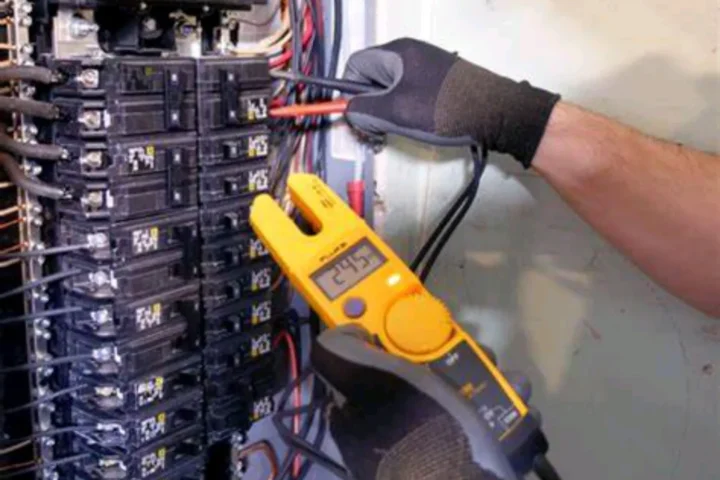
Because the board is live, the work needs to be done by a qualified electrician following safe work practices for energised equipment, with appropriate PPE and controls around the switchboard.
How often should switchboards be scanned
There is no single interval that suits every site. Most commercial and industrial sites scan main switchboards and critical distribution boards annually. Sites with heavy or continuous loads, critical processes or older equipment often scan more frequently.
It is also worth scanning after significant changes, such as adding large equipment, extending a building, or after a switchboard upgrade has been in service for a while. Your insurer or maintenance plan may specify a frequency, so check those first.
What the report should look like
A thermal scan is only useful if the findings are clear enough to act on. A good report includes:
- The switchboards scanned, with location and identification
- A thermal image and a matching standard photo for each finding
- The measured temperature and the temperature rise compared with a reference point
- A priority rating so you know what needs urgent attention and what can be scheduled
- A recommended action for each finding, such as re-terminate, redistribute load or replace the device
- Boards scanned with no findings, so you have a full record
We also recommend a follow-up scan after repairs are done. It confirms the fault has actually been fixed and gives you a clean baseline for next time.
Why insurers are interested
Electrical faults are a known cause of commercial and industrial fires. Some insurers ask about thermal scanning, or ask for evidence of routine electrical maintenance, particularly for industrial and warehouse properties. A dated report with findings and completed repairs is straightforward evidence that the risk is being managed.
Requirements vary between insurers and policies, so check your policy wording or ask your broker what they expect to see.
Pairing thermal imaging with other maintenance
Thermal scanning fits naturally alongside other routine electrical work. Many sites combine it with test and tag and RCD testing and emergency lighting tests so one contractor holds all the electrical compliance records.
Because Eclipse also looks after mechanical services, we can scan HVAC and plant switchboards in the same visit and connect findings with HVAC maintenance. A hot contactor on a chiller or air handler is as much a mechanical reliability issue as an electrical one.
Our thermal imaging service covers main switchboards, distribution boards and motor control centres across Western Sydney and Greater Sydney, with repairs carried out by our own industrial electricians.
Book a scan
If your boards have not been scanned in the last year, or you have noticed breakers tripping or boards that feel warm, it is worth getting a scan booked. Call Eclipse on (02) 9832 9871 or tell us about your site and we will plan a scan around your peak load.
What a good thermal report includes
- Thermal and standard photo for each finding
- Measured temperature and temperature rise
- Priority rating for each finding
- Recommended repair action
- List of boards scanned with no findings
- Follow-up scan after repairs
General information only. Requirements change and depend on your site, so confirm specifics with your certifier or insurer, or ask us.