A building management system is the only part of a building that knows what the plant is doing when nobody is standing in front of it. It decides when air conditioning starts, what each zone holds, when ventilation runs and when lighting drops out of hours, and it is the first place to look when one floor is suddenly uncomfortable and nothing visible has changed. It is also, routinely, the least documented system in the building.
Most facility and strata managers never choose a BMS from scratch. They inherit one: a front end on an ageing computer in a plant room, a controller carrying the sticker of a contractor who no longer answers, and nobody on site who can say what the schedules are set to. Whether you are specifying a new BMS installation, extending one into a new tenancy or taking over a building that already has one, the useful questions are the same – and almost none of them are about the brand on the controller.
What a BMS controls, and what it only watches
Establish first which plant the system commands and which it merely reports on: a manager who thinks the BMS controls a chiller when it is only reading a status contact will spend a week looking in the wrong place.
Controls are not separate from the plant they operate, either. SafeWork NSW describes plant as including machinery, equipment, appliances and tools along with components and anything fitted or connected to those things. The controllers, sensors and field wiring attached to your air conditioning are part of the plant you have duties over, not an IT accessory bolted on beside it.
Why BMS projects disappoint
When a system fails to deliver, the cause is almost never the technology. It is that the building changed and the control settings did not, and nobody could tell. Tenants move, floors are reconfigured, a temporary override goes in during a heatwave and stays in for two years. Sensors drift or fail, and a failed sensor often reports a plausible number rather than an obvious error.
Underneath all of that sits a documentation and ownership problem: if you cannot read what the system is supposed to do, you cannot tell a fault from intended behaviour, and you cannot get a second opinion. That is what a specification should be written to prevent.
Start with the points list, not the hardware
A points list is the inventory of everything the system can see or operate: each sensor, each output, each item of plant, with a name, a type, its units and its location. Ask for it as a priced deliverable at quotation stage rather than something handed over at the end, because it is the only document that lets you compare two quotes honestly. Two contractors offering very different point counts are not quoting the same job.
Get the sequences of operation in writing
For each system, ask for a sequence of operation in plain English: what starts, under what conditions and in what order, what the setpoints and dead bands are, what happens when a sensor fails, and what the system does on a signal from another system. It is a short document, it costs nothing to produce during programming, and it is effectively impossible to reconstruct years later.
It is also what makes a schedule review possible – routine work that belongs in a maintenance contract rather than being rediscovered every few years.
Open protocols, and who holds the keys
Two specification lines protect you more than anything else here. The first: devices communicate over an open, vendor‑neutral protocol wherever the plant allows it, so another competent contractor can read and change the system later. The second: administrator‑level credentials for the front end are issued in the owner’s or owners corporation’s name and held by you, not only by the installer. A building that cannot answer the first point cannot get a competitive quote on its own controls.
- Ask, in writing, whether a different contractor could make changes to the system without replacing hardware.
- Ask who owns the graphics pages and the programming files, and what you receive copies of at handover.
- Ask what software or subscription the front end depends on, and in whose name it is registered.
- Record the credentials somewhere that survives a change of manager.
Where the BMS stops and fire safety starts
Many commercial and strata buildings have mechanical systems that appear on the building’s fire safety schedule: smoke exhaust, stair pressurisation, air handling with a fire mode. A BMS often monitors or interfaces with these, and that interface needs drawing explicitly before any controls work begins.
Fire and Rescue NSW explains that the owner of a building having a fire safety schedule must give a copy of the fire safety statement to the FRNSW Commissioner, and that an annual fire safety statement says each essential fire safety measure specified in it has been assessed by an accredited practitioner (fire safety) as capable of performing to a standard no less than the one in the schedule. Controls work that changes how such a measure behaves is therefore something that practitioner needs to know about. Document the boundary, keep the fire system’s own control path intact, and say what changed. What applies to your building depends on its own fire safety schedule and your consent authority, so treat this as a prompt to check rather than as advice. Our note on stair pressurisation systems covers one of these measures in more detail.
Trends and alarms are your evidence
SafeWork NSW’s guidance on ventilation at work states that a person conducting a business or undertaking must ensure, so far as is reasonably practicable, that ventilation enables workers to carry out their day‑to‑day work without risk to health and safety. It adds that a person with management or control of plant such as a mechanical ventilation system must ensure its maintenance, inspection and, if necessary, testing is carried out by a competent person according to the manufacturer’s recommendations, or the competent person’s where the manufacturer’s are not available.
The same guidance suggests reviewing humidity and temperature levels, checking that air flow and its direction and distribution are adequate, and investigating whether the system is operating properly. A BMS with trend logging switched on answers all of those with recorded data rather than recollection. So specify which points are trended, how long the history is kept, where alarms go and who owns them. Trend logging is trivial to enable at commissioning and cannot be applied to a month you did not record. Pair it with the service history from your HVAC maintenance and most plant arguments settle themselves.
Who should do the work
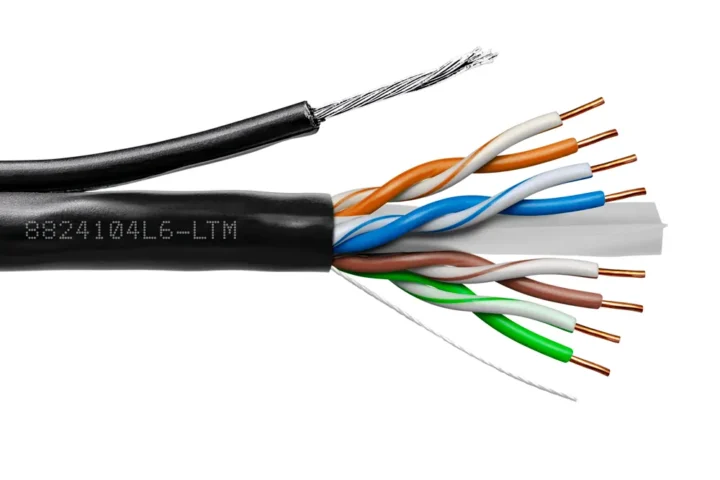
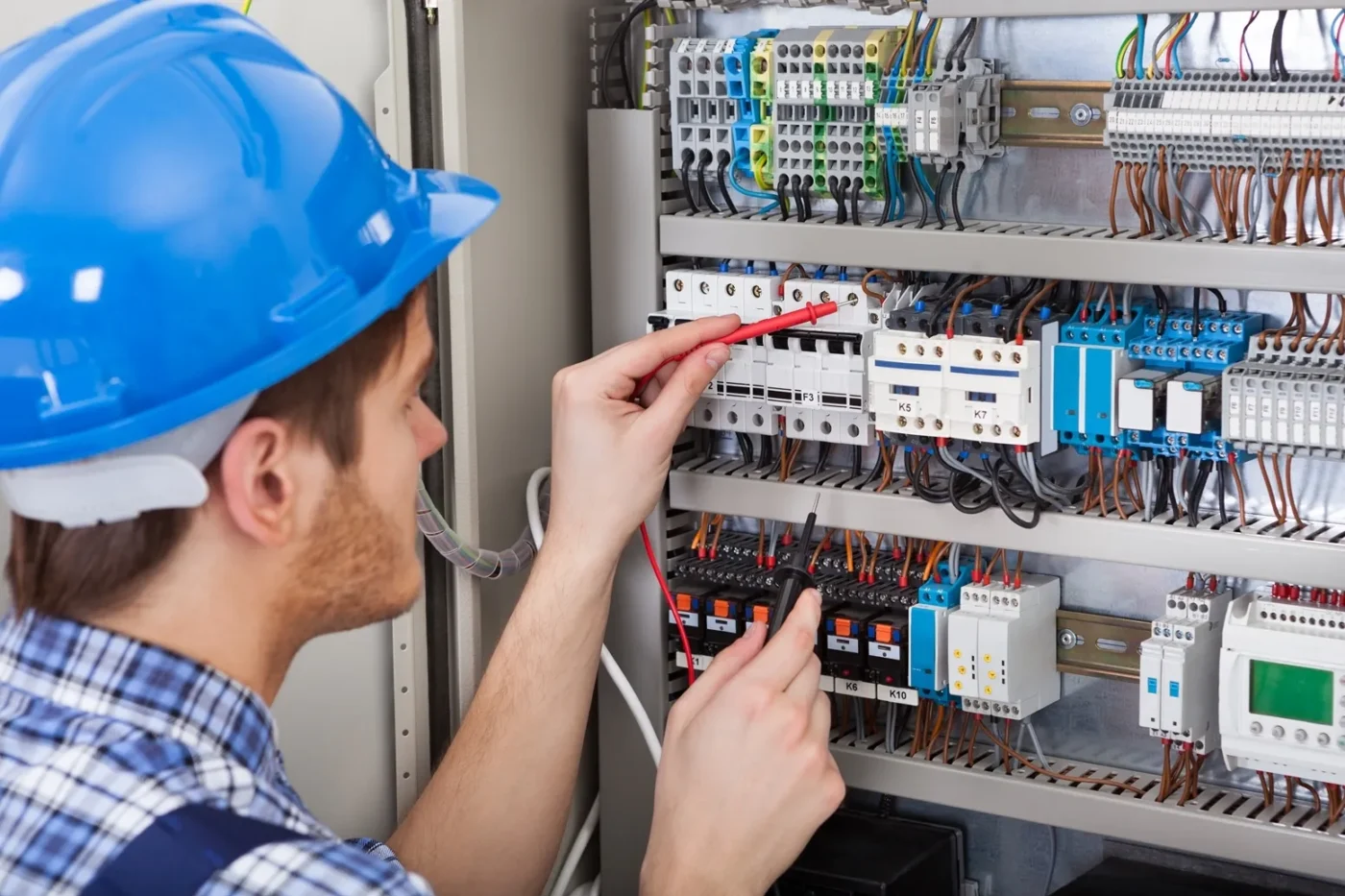
A BMS installation sits across three trades. The field wiring, the control panel and the power supplies are electrical work. The communications cabling the controllers talk over carries its own requirements, worth reading alongside what to specify for commercial data cabling. And the programming only produces sensible results if whoever writes it understands the mechanical plant underneath.
Where the controlled plant contains refrigerant, handling it is separately regulated again; Eclipse holds ARC refrigerant trading authorisation AU35479. The practical point is to avoid splitting the job so that three contractors can each say the fault belongs to one of the others.
Next steps
If you cannot produce your building’s points list, say who holds the front‑end credentials, or show a trend for last summer, that is the place to start rather than a new system. Our office hours are Monday to Friday, 7am to 5:30pm, and we offer after-hours call-outs for commercial and industrial sites. Call Eclipse on (02) 9832 9871 or send us your site details, and we will review what your building management system already does before anyone quotes new controls.
Before you commission BMS work
- Ask for the points list as a priced deliverable at quotation stage, not at handover
- Ask for a plain-English sequence of operation for each system, including failure modes
- Confirm devices use an open protocol another contractor could read and change
- Have administrator credentials issued in the owner's name and recorded where they survive a change of manager
- Agree which points are trended and how long the history is kept
- Document the boundary with any plant listed on the building's fire safety schedule
General information only. Requirements change and depend on your site, so confirm specifics with your certifier or insurer, or ask us.