Test and tag is one of the most familiar electrical safety tasks in Australian workplaces, and one of the most misunderstood. Many businesses assume every item needs a new tag every 12 months. In reality, AS/NZS 3760 sets intervals based on the environment the equipment is used in, and getting that right can save money in low-risk areas while tightening up where the risk is genuinely higher.
This guide explains how intervals are set, what a proper test covers, how RCDs fit in and what records you should expect from your tester.
What AS/NZS 3760 covers
AS/NZS 3760 is the Australian and New Zealand Standard for the in-service safety inspection and testing of electrical equipment. It applies to equipment that plugs into a socket outlet, such as power tools, extension leads, power boards, kettles, computers, chargers and portable appliances, along with portable RCDs. The current edition was published in 2022, so it is worth checking your tester is working to it.
In NSW, the Work Health and Safety Regulation requires a business to manage the risks of electrical equipment, and it specifically calls for inspection and testing by a competent person in higher-risk settings such as construction work and hostile operating environments. AS/NZS 3760 is the standard most businesses use to show they are doing that properly.
Test and tag intervals by environment
The standard sets a maximum interval between inspections for each type of environment. The idea is simple: the harsher the environment and the more the equipment is moved, flexed or knocked around, the more often it should be checked.
Construction and demolition sites: every 3 months
Construction sites are among the toughest environments for leads and tools. Cords are dragged across concrete, run over, exposed to water and dust, and swapped between workers. The short three-month interval reflects that.
Factories, workshops and manufacturing: every 6 months
Places of manufacture, assembly, maintenance, repair or fabrication sit on a six-month cycle. For many of our clients in Minchinbury, Eastern Creek and Wetherill Park, this covers workshop tools, bench equipment and leads used around production areas.
Offices and low-risk areas: up to 5 years
Equipment that is not subject to flexing or abuse and is not in a hostile environment, such as a desktop computer that sits on a desk and is never moved, can go up to five years between tests. That is a long way from the annual cycle many offices default to.
Everything in between
Plenty of equipment falls between those examples. A laptop charger that travels between desks and home, or a kettle in a busy staff kitchen, is flexed and handled every day. The standard treats equipment like this more conservatively than a fixed desktop PC. Your tester should assess each area and set intervals accordingly, rather than applying one date to the whole site.
What a test and tag actually involves
A proper test is more than a sticker. For each item, a competent tester should:
- Visually inspect the plug, cord, cord grip and housing for damage, heat marks, exposed conductors and unsafe repairs
- Test earth continuity on Class I (earthed) equipment to confirm the protective earth path is sound
- Test insulation resistance or leakage current to confirm the insulation has not broken down
- Check polarity on extension leads and cord sets
- Tag the item with the tester’s name, the test date and the retest date
- Remove failed items from service and label them clearly so they are not used
Visual inspection catches a large share of faults. A crushed cord or cracked plug top is a fail no matter what the meter says.
Equipment with variable speed drives
Some equipment, particularly items with electronic motor controls or variable speed drives, cannot be tested properly with a standard insulation test while switched off. A leakage current test with the equipment running gives a more meaningful result. We include VSD testing as part of our test and tag service so these items are not simply skipped.
RCD testing
Residual current devices are the main line of defence against electric shock, and they need to be tested too. There are two types of check:
- Push-button test. Pressing the test button confirms the mechanism trips. This can be done by users and is recommended regularly.
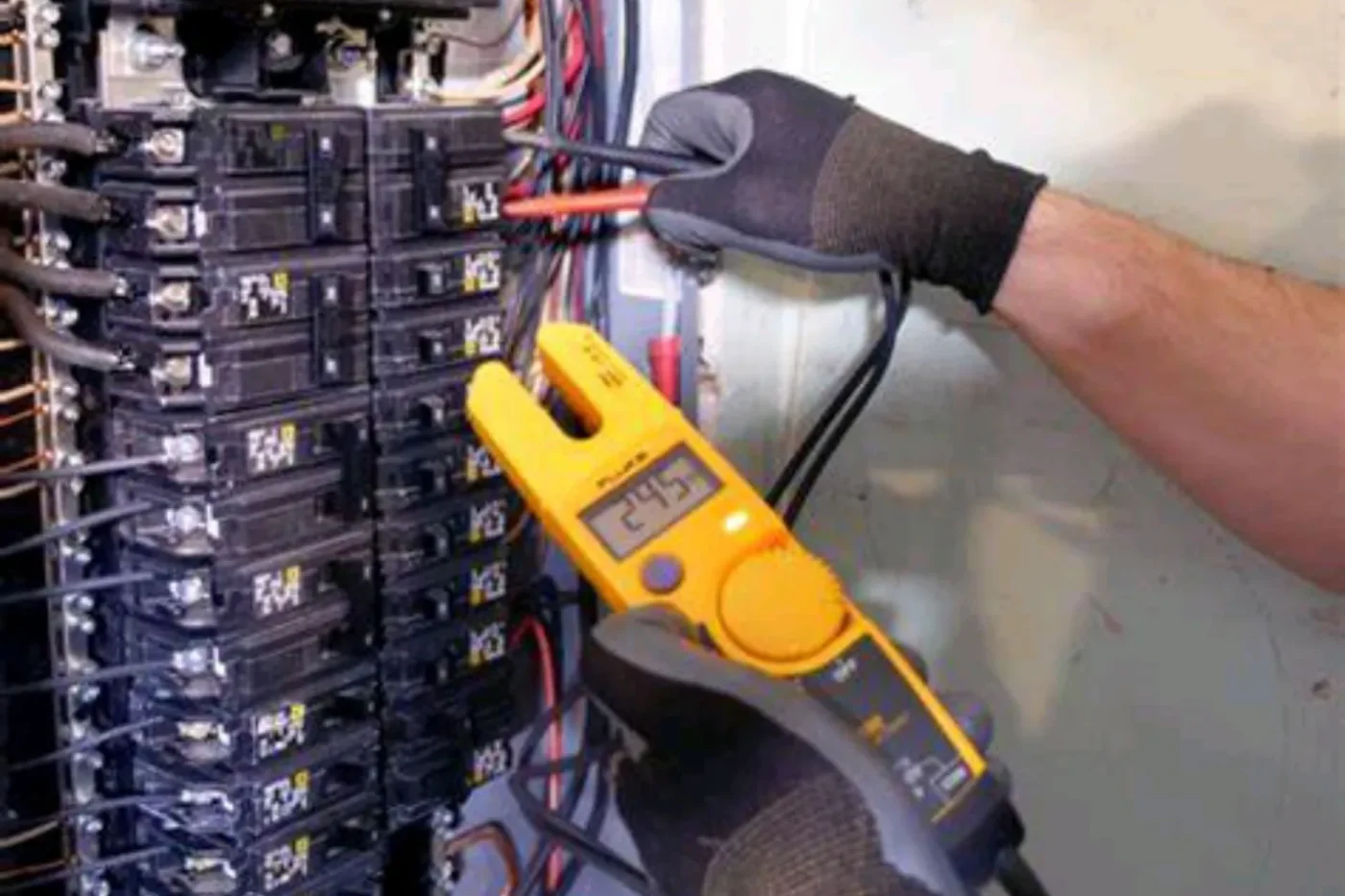
- Operating time test. An instrument injects a measured fault current and records how quickly the RCD trips. This confirms it will disconnect fast enough to protect a person, and must be done by a competent person with the right equipment.
This applies to RCDs fixed in switchboards as well as portable RCDs. The required frequency depends on the environment, so ask your tester to set it out in the test schedule. On older sites, RCD testing often reveals circuits with no RCD protection at all, which points to a switchboard upgrade.
Records you should receive
The tag on the item is only half the record. After each round of testing you should receive a register listing every item, its location, the test result, the date and the next due date, along with a list of failed items and what happened to them.
That register is what you will need to show an auditor, a principal contractor or a WHS inspector. It also makes the next round quicker, because the tester can check off known items and pick up anything new.
Common misconceptions
“Everything needs testing every 12 months”
Not necessarily. Intervals depend on the environment. A single annual date can mean over-testing low-risk office equipment and under-testing workshop gear.
“If it has a current tag, it is safe”
A tag records a result on one day. Equipment can be damaged the next morning. Users should still check leads and plugs before use and report damage straight away.
“Brand-new equipment needs testing before use”
New equipment is generally treated differently, but it should still be visually inspected and recorded as entering service so it comes into the testing cycle. Confirm your approach with your tester or WHS adviser.
“Anyone with a tester can do it”
Testing must be done by a competent person who knows how to use the instrument, interpret the results and decide what is safe. Our industrial electricians can also repair or replace failed plugs and leads on the spot rather than just putting them out of service.
Setting up a sensible schedule
For most businesses the simplest approach is to split the site into zones by environment, set an interval for each, and book testing on a fixed cycle. For warehouses and logistics sites, that often means workshops and charging areas on a six-month cycle and offices on a longer one.
If you would like a tester to review your site and set a schedule that fits, call Eclipse on (02) 9832 9871 or request a quote. We can also combine test and tag with RCD testing and emergency lighting checks under a maintenance contract.
What a test round should cover
- Visual inspection of every item
- Earth continuity and insulation or leakage tests
- Polarity checks on leads and cord sets
- Tags with tester, test date and retest date
- Failed items removed and labelled
- RCD operating time tests
- Full register with next due dates
General information only. Requirements change and depend on your site, so confirm specifics with your certifier or insurer, or ask us.