Electric vehicles are turning up in car parks faster than the buildings around them were wired for. For an owners corporation or a facility manager the subject usually opens with one resident or one tenant asking whether they can plug in downstairs – and the answer commits the building to a path it will live with for a long time. Planning EV charging in strata buildings and commercial car parks is much less about the charger on the wall than about everything sitting upstream of it.
The sequence is well established, and the NSW Government publishes guidance for both strata schemes and commercial buildings. What follows is the practical version, written for the people who have to run the building afterwards.
Start upstream, not at the charger
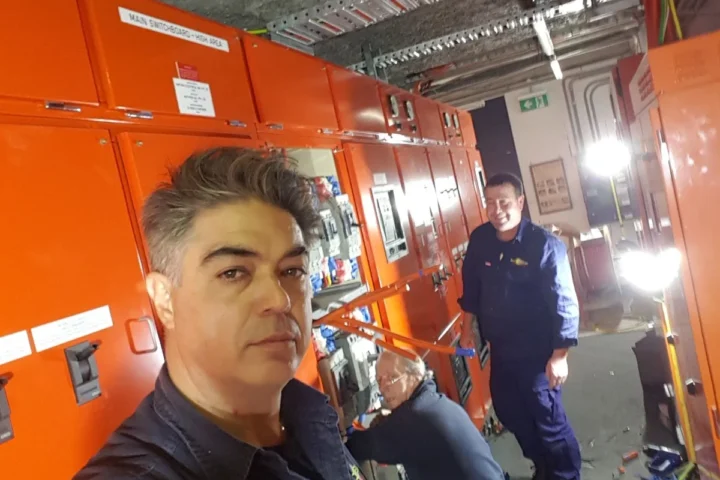
A charge point is the simplest part of the job. The questions that decide whether a scheme works sit further back: how much spare capacity the incoming supply and the main switchboard actually have, whether there is physical room on the board for new protective devices and metering, and how cable will get from the switchroom to the parking level without cutting through fire-separating construction.
Most established Sydney buildings were sized for lifts, lighting, ventilation, air conditioning and a light allowance for car park power. A handful of chargers drawing steadily for hours at a time is a different load shape to anything the original design assumed. That is why an energy assessment sits near the front of the NSW process, before any hardware is chosen.
A useful assessment should tell you:
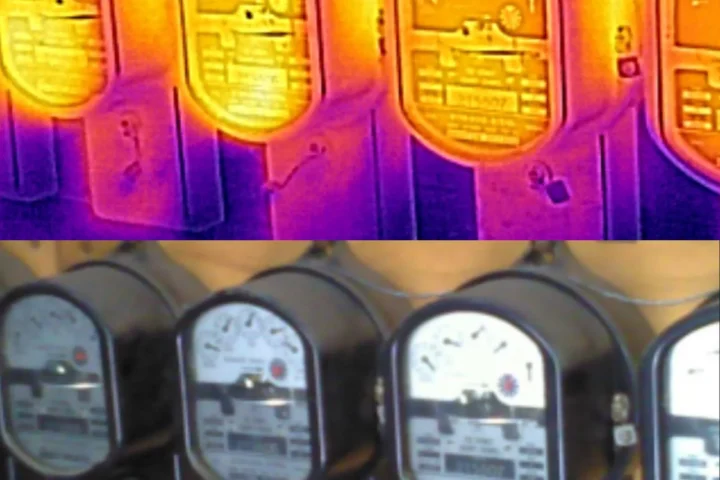
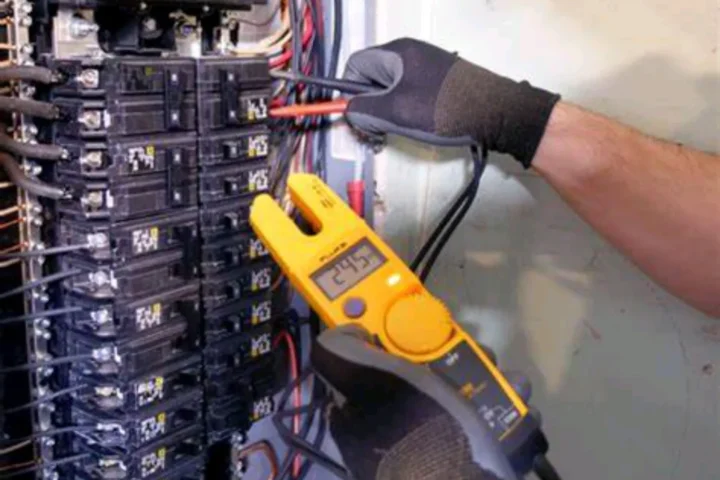
- Measured maximum demand – logged on site over a representative period, not estimated from equipment nameplates.
- Genuine spare capacity – what is available at the main switchboard and at the connection point, and what the network operator would need to approve.
- Board condition and space – older boards may need work before anything is added, and a switchboard upgrade is sometimes the real project hiding behind a charger request.
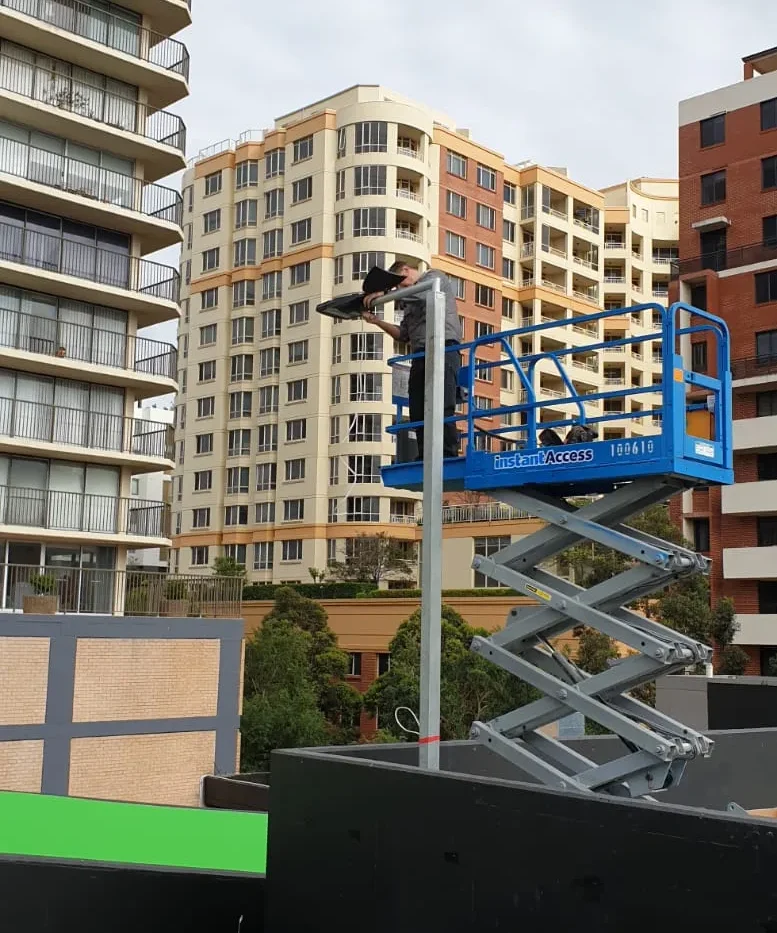
- Cable routes – distances, containment, and where penetrations would pass through fire-rated walls and slabs.
- Realistic charge point numbers – how many the site can carry as it stands, and how many it could carry with load management in place.
What the NSW strata process expects
In a strata scheme, charging infrastructure almost always touches common property. The NSW guidance on making your residential strata building EV ready explains that changing a building’s electrical services or infrastructure requires specific steps under section 108 of the Strata Schemes Management Act 2015, read together with the Strata Schemes Management Amendment (Sustainability Infrastructure) Bill 2020. That amendment categorises the installation of EV charging infrastructure as a sustainability infrastructure upgrade, and replaces the special resolution previously required. On voting, the guidance states the requirement is that ‘less than 50% are against the resolution’, and that the owners corporation must have a 10 year capital works fund which budgets for the provision of capital works.
That is the shape of the process, not advice for your scheme. The department’s own material notes that by-laws and the process for varying them differ from building to building, and that independent expert or legal advice should be obtained before a decision is made. Its example motions and by-laws are a sensible thing to take to your strata lawyer. For managers weighing this up alongside the rest of a building’s services, our strata and property services page sets out how this work usually runs.
Load management is what makes the numbers work
Without controls, every charge point has to be treated as though it might draw full current at the same moment as every other one. That assumption is what turns a modest request into a supply upgrade. With load management the building shares the capacity it already has: chargers step down while the building is busy and step back up overnight. The NSW guidance points to an off peak timer or CT arrangement for a single installation, and a demand management system where a whole building is being set up.
The other decision worth making early is how much to build now. Running conduit, containment and spare ways while the car park is already disrupted saves opening it all up again later, even where only a few charge points are energised to begin with.
Metering, billing and the common property account
Someone has to pay for the electricity, and a charger fed from the common property supply lands on the owners corporation account by default. The NSW guidance sets out options ranging from charging on an owner’s own meter, to supplies metered at an infrastructure box, to an arrangement managed by the owners corporation or outsourced, with costs recovered through an access fee or over time from the users. Settle this before equipment is selected, because the metering approach narrows down which hardware and software will suit.
Commercial car parks, warehouses and fleet sites
Outside strata the approvals are simpler, but the load questions get sharper. A fleet or logistics site has vehicles that must be ready at a fixed time each morning, so charging becomes a scheduled operation rather than an amenity, and it has to share the site with refrigeration, compressors and dock equipment. In warehouse and logistics buildings there is often capacity on paper, but it is committed to plant that runs on its own cycle, so the assessment has to look at coincident demand rather than headline figures. Offices and retail buildings face the opposite situation: supply is usually tighter, but cars sit in the same bay all day, which makes shared, managed charging straightforward. NSW publishes separate guidance on making a commercial building EV ready.
Getting the work done and signed off
Whatever the building type, the electrical work is regulated. The NSW electrical compliance requirements state that any electrical wiring work must be done by, or under the supervision of, a licensed electrician, and that the electrician must provide the Building Commission NSW with a certificate of compliance for electrical work demonstrating the work has been tested and complies with the Gas and Electricity (Consumer Safety) Regulation 2018. It is to be submitted as soon as practical, and no later than seven days after the electrical test has been completed, with copies going to the electrical distributor where required.
Keep that certificate, the as-installed drawings and the commissioning records with the building’s maintenance file rather than in somebody’s inbox. Chargers, their protective devices and any load management controller then belong on the routine maintenance round alongside the rest of the building’s electrical services, which is the simplest way to keep them working. Our maintenance contracts and EV charger installation pages cover how both sides of that fit together.
Next steps
If your building is being asked about charging and nobody can say what spare capacity the switchboard has, the assessment is the place to start. Our office hours are Monday to Friday, 7am to 5:30pm, and we offer after-hours call-outs for commercial and industrial sites. Call Eclipse on (02) 9832 9871 or send us your site details and we will arrange an assessment of your supply, switchboard and cable routes.
Owners corporation checklist
- Measure maximum demand before choosing hardware
- Check the main switchboard for space, not only capacity
- Confirm the approval path and by-law with your strata lawyer
- Run conduit and spare ways for later stages while the car park is open
- Decide metering and cost recovery before equipment is selected
- Keep the compliance certificate and as-installed drawings with building records
General information only. Requirements change and depend on your site, so confirm specifics with your certifier or insurer, or ask us.